Most people believe lasting love depends on finding the right person. Others believe it depends on hard work, compromise, or unwavering commitment. While each of those ideas contains some truth, they overlook a more fundamental reality. Lasting love is not simply about enduring hardship together. It is about remaining aligned with who you were created to be while growing alongside another imperfect person.
Many relationships fail, not because love disappears, but because one or both people gradually lose themselves in the process. They silence their convictions to avoid conflict, neglect their emotional well-being to keep the peace, or reshape their identity to preserve the relationship. Over time, what once felt like devotion becomes exhaustion. What appeared to be commitment quietly becomes self-abandonment.
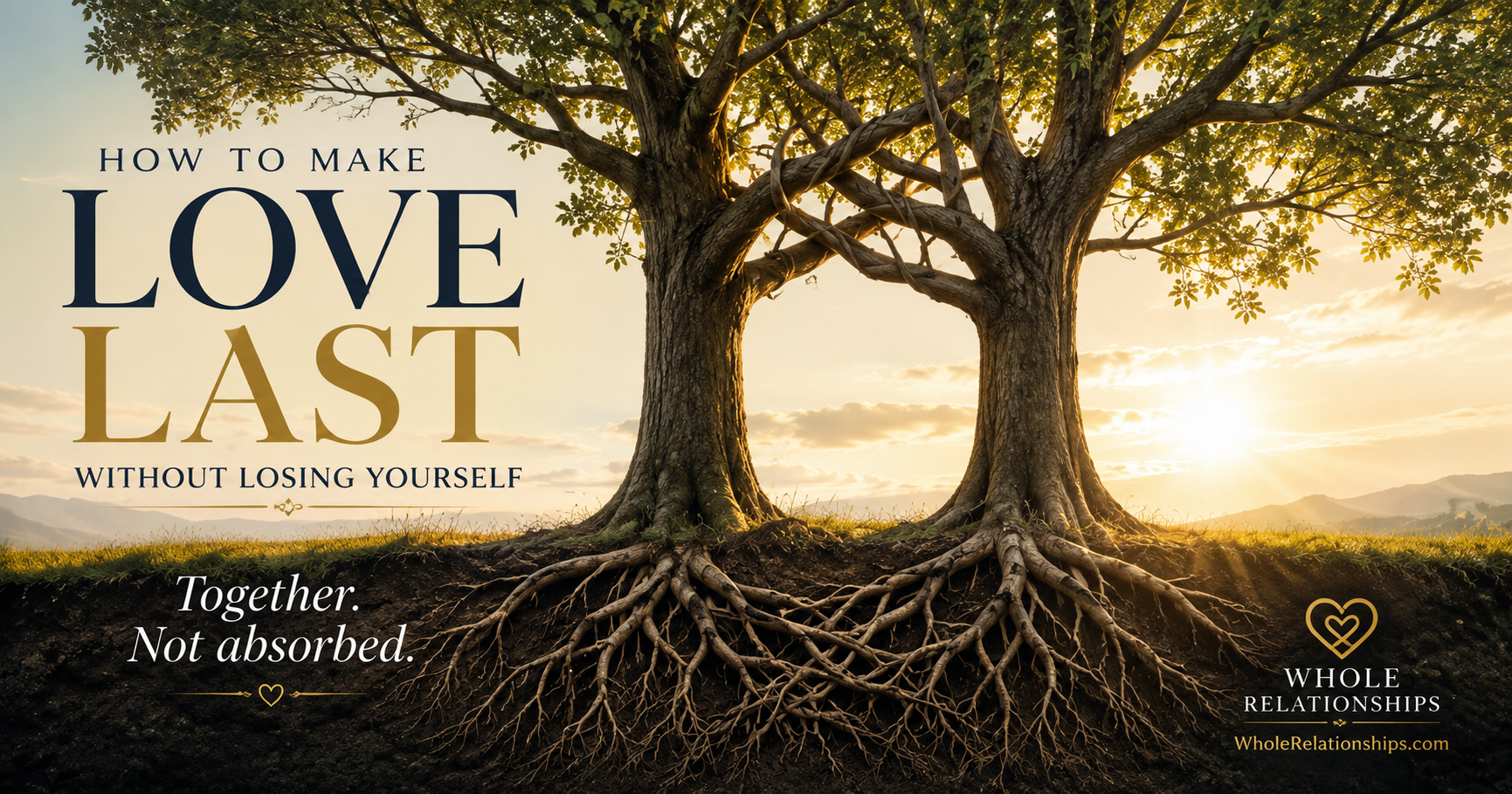
The goal of healthy love has never been to disappear into another person. It is to become whole enough that two people can freely choose one another without sacrificing their God-given identity. Lasting love is not sustained by losing yourself. It is sustained by growing together.
The Danger of Self-Abandonment
One of the greatest misconceptions about love is that sacrifice and self-abandonment are the same thing. They are not. Healthy relationships require sacrifice, but sacrifice is the voluntary giving of ourselves for another person’s good. Self-abandonment occurs when we consistently ignore our values, needs, convictions, or emotional health to avoid disappointment, rejection, or conflict.
At first, self-abandonment can appear noble. We become accommodating, agreeable, and endlessly flexible. We tell ourselves we are being loving, but over time resentment begins to grow because we are living further and further away from the person God created us to be.
This is one reason healthy relationships function as mirrors. They reveal where we have confused peacekeeping with peace, accommodation with love, or approval with acceptance. They invite us to ask whether we are serving another person from freedom or from fear.
When Commitment Becomes Compliance
Commitment is one of the highest expressions of love because it chooses faithfulness even when emotions fluctuate. Compliance, however, is something entirely different. Compliance is motivated by fear. It says yes because it is afraid to say no. It remains silent because honesty feels too risky. It agrees because disagreement might threaten the relationship.
Healthy commitment never requires us to abandon integrity. Instead, it creates the safety necessary for honesty to flourish. Love that cannot tolerate truth will eventually struggle to sustain intimacy because genuine intimacy cannot exist without authenticity.
Whole relationships are built by two people who are committed not only to preserving the relationship but also to becoming more truthful versions of themselves within it.
Understanding Your Core Soul Needs
One of the central ideas in Whole Relationships is that every person carries core Soul Needs that influence how they think, relate, and make decisions. While many relationships focus almost exclusively on emotional needs, emotional experiences are often responses to something deeper.
Our need for truth grounds us in reality and identity. Our need for love reminds us that we were created for connection rather than isolation. Our need for faith enables us to trust God’s character even when circumstances challenge our understanding. These needs shape the way we experience intimacy, conflict, forgiveness, and commitment.
When we are unaware of these deeper needs, we often expect another person to provide what only truth, spiritual maturity, or personal growth can supply. Healthy relationships flourish when both individuals learn to recognize these deeper motivations and take responsibility for their own spiritual and emotional development.
The Role of Personal Boundaries
Contrary to popular belief, boundaries are not barriers to love. They are the framework that allows love to remain healthy. Boundaries protect dignity, encourage responsibility, and create space for mutual respect. They allow two whole people to love one another without controlling, rescuing, or losing themselves.
Healthy boundaries also make honesty possible. They allow us to express disagreement without withdrawing affection and to acknowledge limitations without fearing rejection. Rather than weakening commitment, boundaries strengthen it because they are built on truth instead of pretense.
The healthiest relationships are not those in which two people become indistinguishable. They are those in which two distinct individuals choose to love one another with openness, humility, and mutual respect.
Sustaining Love Through Growth
Many people think lasting love is measured by longevity alone. Remaining together for decades is certainly an achievement, but time by itself does not define relational health. A relationship can endure while affection, trust, and emotional intimacy quietly erode. Lasting love is more than endurance. It is sustained alignment.
Alignment occurs when two people continue growing toward truth rather than drifting toward self-protection. It is the ongoing practice of choosing honesty over image, humility over pride, forgiveness over resentment, and service over selfishness. Growth does not eliminate conflict, but it transforms conflict into an opportunity for deeper understanding rather than greater division.
In the end, lasting love is not found by losing yourself in another person. It is found when two people are continually becoming more whole. As each person grows in truth, healing, and maturity, they become increasingly capable of offering love freely rather than desperately. That is the kind of love that endures because it is rooted not merely in emotion or endurance, but in alignment with God’s design and with the people He created us to become.
Share This Article
If this article encouraged or challenged you, consider sharing it with someone who may need it. Healthy conversations often begin with a single thoughtful insight.
Continue Reading
You may also enjoy:
Leave a Reply
You must be logged in to post a comment.